

Communication for people with ALS
AIDA is developing products that aid the communication of people with ALS to improve their life quality and give them a voice in society.

Augmentative and Alternative Communication (AAC)
Amyotrophic Lateral Sclerosis (ALS), or Lou Gehrig’s disease, one of the most serious and common Motor Neuron Diseases (MNDs). Patients rely on Augmentative and Alternative Communication (AAC) systems to communicate.
AAC refers to an array of systems, techniques and devices which support people with limited or no intelligible speech.
Gaze Link
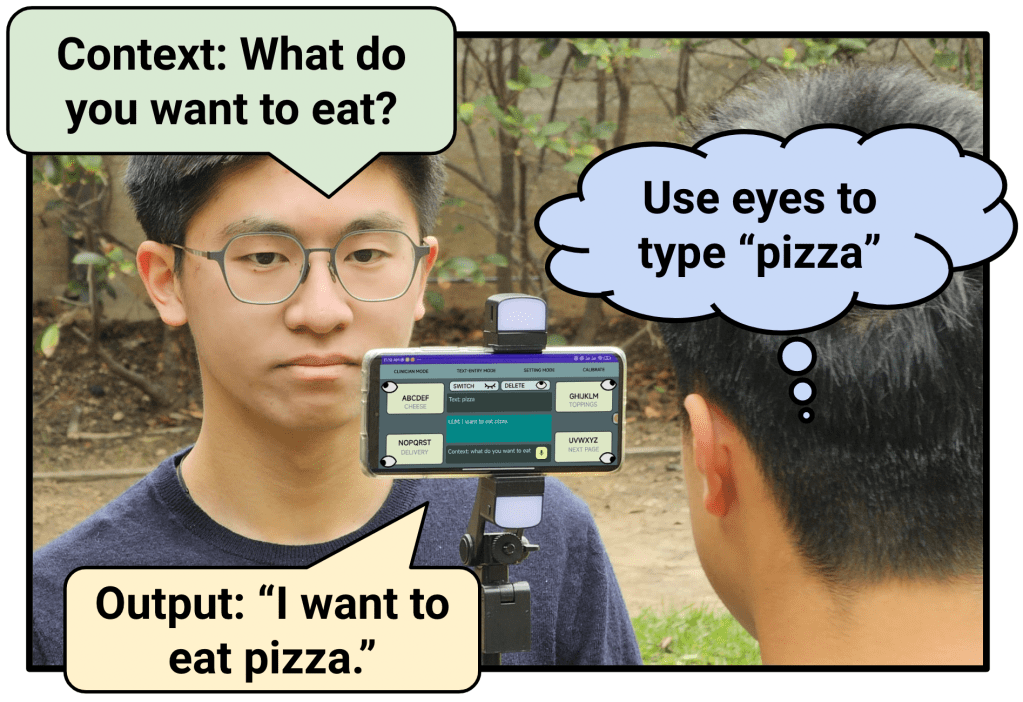
Gaze Link is a free AI-driven eye-typing AAC application that helps people with ALS to communicate without using expensive devices but smart phones.
Video Demonstration
Gaze Link has many advantages.
3 Languages
Gaze Link works with English, Chinese, and Spanish. It is also adaptable to different lighting and users.
$0 Cost
Gaze Link is free and available in 100+ countries on the Google Play Store.
15 words per minute
Gaze Link outperforms other low-tech devices.
AI in Gaze Link:
Large Language Models
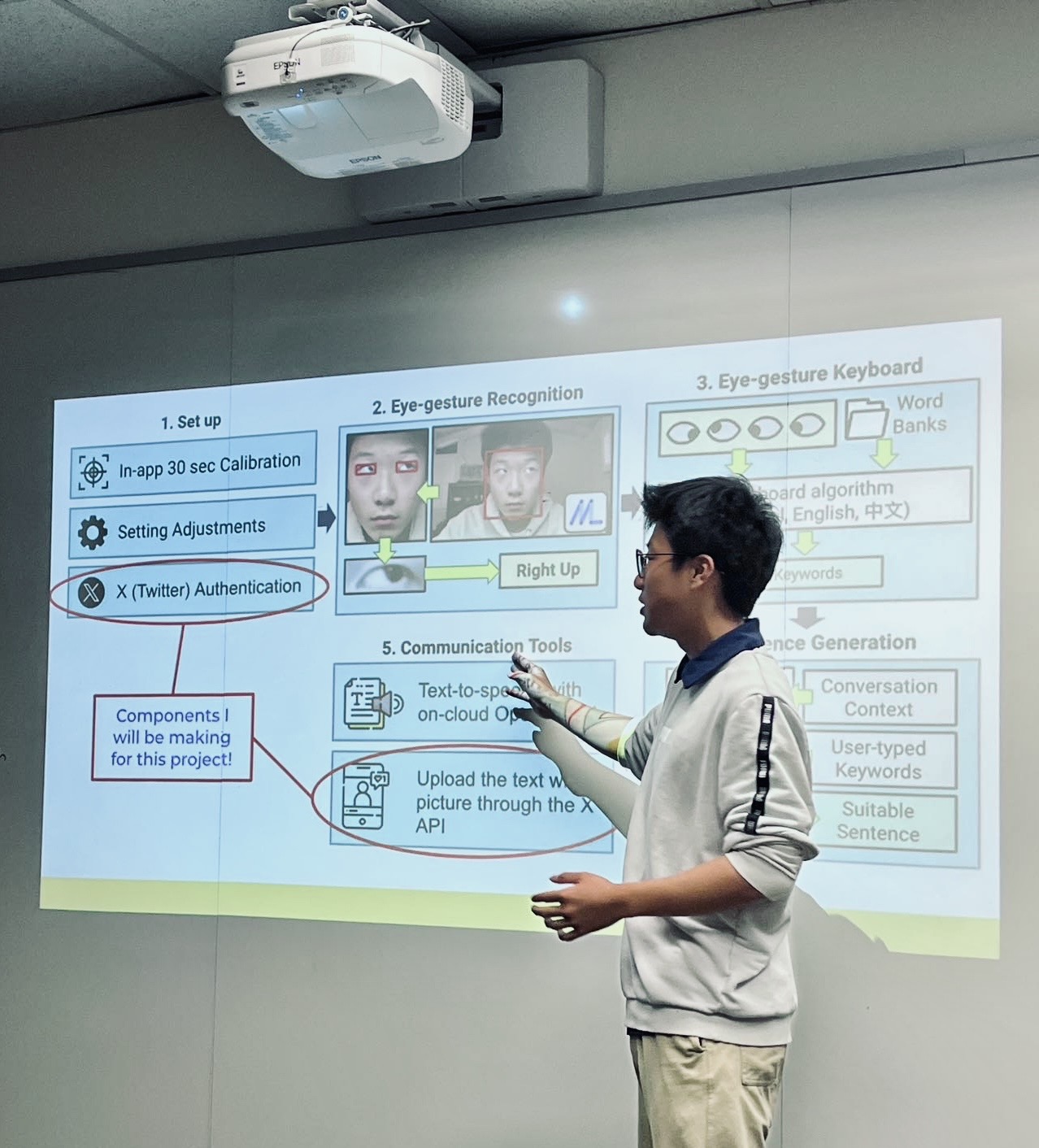
Large Language Models (LLMs) are AI programs that are excellent at generating and interpreting human language. Gaze Link uses multiple LLMs to generate sentences based on keywords and context, improving efficiency and range of expression.
International Science and Engineering Fair (ISEF) Presentation
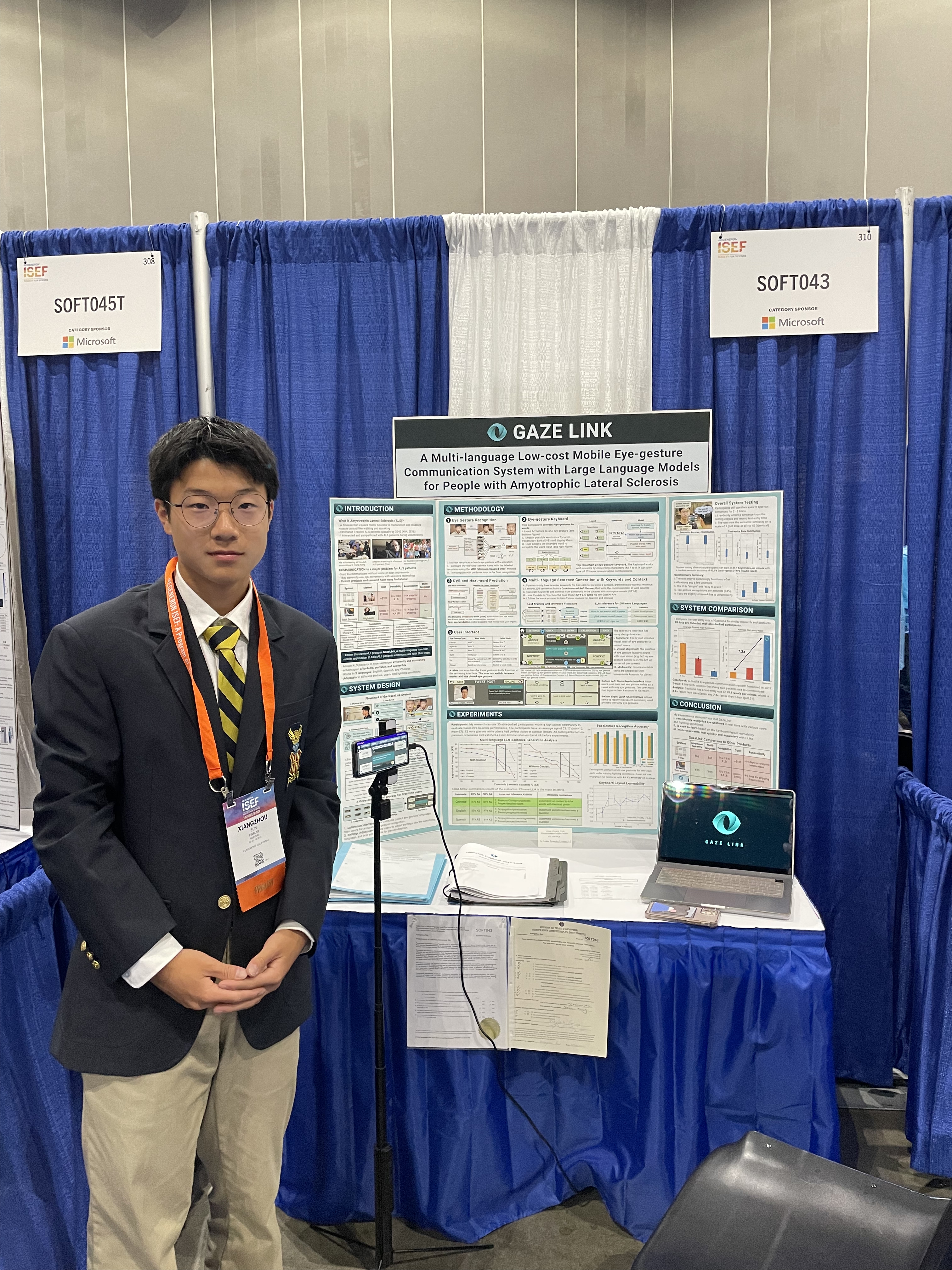
Gaze Link was presented at the largest high school science fair in the world, ISEF, winning a grand award (2nd place) in the category Systems Software sponsored by Microsoft. The product also won 2 special awards, presented by AAAI and IEEE.
 AIDA Association